Auction Support: What to Expect and How to Use It
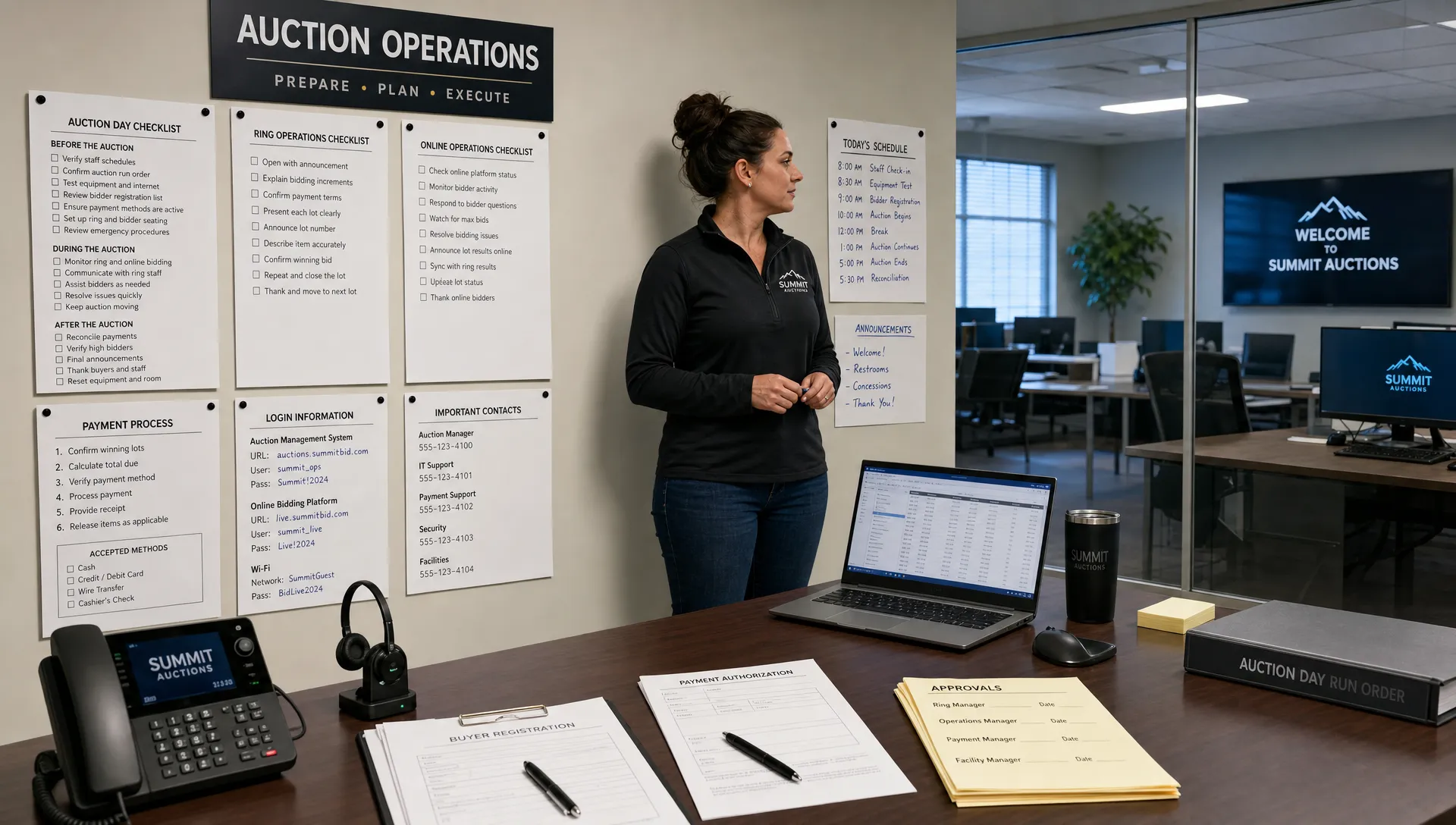
If you run online auctions, auction support is the operational safety net that keeps sellers, bidders, payments and rules aligned from setup to settlement. It is not just a help desk for emergencies. Used well, it helps your team prevent confusion, protect bidder confidence and capture stronger market demand without adding unnecessary manual work.
For businesses using a self-service auction platform, support should make the system easier to run, not replace the strategy behind it. The best results come when your team knows what support can handle, when to involve it and what information to provide so issues are resolved quickly.
What auction support should cover before bids open
Before an auction goes live, support is most valuable when it helps remove friction that would otherwise appear under pressure. That includes clarifying auction rules, checking bidder access, confirming payment settings and making sure your team understands the workflow.
A strong pre-launch support process should help you answer practical questions such as who can bid, how bids are extended, what happens when a reserve is not met and how winners are notified. These details affect trust. If bidders see unclear rules or inconsistent communication, they may hesitate, even when they want the item or allocation.
Configuration and rule checks
Most auction problems begin as setup problems. A reserve price entered incorrectly, a closing time set in the wrong time zone or a bidder approval step left unclear can create avoidable support tickets later.
Before launch, ask support to review the areas that carry the most operational risk:
Auction format, timing and bid extension rules
Starting bids, reserve prices and any buyer fees
Bidder registration, approval and eligibility requirements
Payment authorization, capture timing and refund handling
Winner notifications and post-auction next steps
This does not mean support owns your commercial decisions. Your team still sets the pricing strategy, audience and terms. Support helps confirm that the platform setup matches those decisions.
Bidder onboarding and visibility
Good auction support also helps you reduce bidder confusion before demand starts coming in. That may include guidance on registration instructions, bidder FAQs, reminder emails or test bidding with internal users.
Visibility matters too. If qualified buyers do not know the auction exists, even a well-configured event can underperform. In property-related auctions or high-value asset sales, marketing channels often work alongside the auction platform. For example, this guide on how real estate marketing sites support listing visibility explains why getting listings in front of the right buyers can be just as important as presentation or price.
What to expect from auction support during a live event
During a live auction, the support function shifts from preparation to response. The goal is not to change strategy midstream unless necessary. It is to keep the auction fair, accessible and technically stable while your team monitors bidder behavior.
You should expect support to help triage issues based on urgency. A bidder who cannot reset a password is different from a payment authorization failure on a high-value lot near close. Clear escalation paths prevent your internal team from treating every question as equally urgent.
Live issue | Typical impact | Best first response |
Bidder login trouble | May block participation | Verify account status, browser issues and access rules |
Confusion about bid increments | Can slow bidding | Point bidders to rules and confirm the correct increment logic |
Payment authorization failure | May affect bidder eligibility | Check processor response and ask bidder to update payment method |
Suspected duplicate account | May affect auction integrity | Pause approval or escalate for review based on policy |
Closing time question | Can cause disputes | Confirm published time zone, extension rules and final close logic |
Payment and security help
Payments deserve special attention because they sit at the intersection of revenue, trust and compliance. If your auction platform supports secure payment processing, your team should still understand what happens when a card is authorized, when funds are captured and how failed payments are handled.
Your auction support team can help interpret platform behavior, but payment policies should be documented before launch. If your business is refining this process, Rankbid’s guide to payment processing for online auctions explains the authorize-then-capture flow, fraud prevention considerations and international payment factors in more detail.
Rankbid supports secure payments via Stripe, which can simplify collection and reduce manual handoffs. Even so, your team should decide in advance who contacts winning bidders, how long they have to complete payment and what happens if a payment fails after the auction closes.
How to use auction support without slowing your team down
Support works best when your team gives it context. A vague message such as “bidding is broken” forces someone to investigate from scratch. A precise message can shorten resolution time and reduce back-and-forth during moments when every minute matters.
Create a simple internal habit: before escalating, capture the auction name, bidder email, item or lot, time of issue, screenshot if available and the expected versus actual behavior. This gives support a clean starting point.
Build a pre-launch question bank
Many bidder questions are predictable. Instead of answering them manually during every event, turn them into short help copy that can be reused across auctions.
Your question bank should cover account creation, bid placement, proxy or maximum bids if used, payment requirements, closing rules and winner communication. Keep the language plain. Bidders should not need to understand your internal operations to participate confidently.
A good auction support rhythm includes reviewing the most common questions after each event. If five bidders asked whether the close time was local or global, that is not only a support issue. It is a content issue that should be fixed before the next auction.
Share ownership before launch
Support cannot be effective if no one knows who makes decisions. Assign internal owners for commercial judgment, technical configuration, payment questions and bidder communication.
For example, support may identify that a bidder is blocked because approval is pending, but your team may need to decide whether that bidder qualifies. Support may confirm that the reserve logic is working, but your team decides whether the reserve was set correctly. This separation keeps support useful without handing over business decisions that belong internally.
Matching auction support to your auction model
Not every auction needs the same support model. A single small auction with ten approved bidders has different needs than a recurring marketplace with hundreds of simultaneous listings.
Auction model | Support priority | Operational focus |
One-time sale | Pre-launch setup and bidder instructions | Avoiding configuration mistakes |
Recurring auctions | Reusable processes and reporting | Reducing repeated manual work |
Private high-value auctions | Eligibility, confidentiality and payment readiness | Protecting trust and access control |
Multi-auction operations | Standardization and escalation rules | Coordinating many events at once |
Global auctions | Time zones, payments and communication clarity | Preventing cross-border confusion |
If you are running many auctions at once, support should become part of your operating system. That means standardized templates, common issue categories, escalation rules and shared reporting. Rankbid’s checklist for scaling multi-auction operations is a useful next step if your team is moving beyond one-off events.
Rankbid is built for self-service auctions, easy API integration, global availability and dedicated customer support. Those capabilities are most useful when paired with internal processes that define how your team will launch, monitor and close auctions consistently.
Common mistakes that make support harder
The most common support problems are rarely caused by one dramatic failure. They usually come from unclear ownership, rushed launches or assumptions that bidders already understand the process.
One mistake is waiting until the auction is live to test the bidder journey. Test registration, bid placement, payment authorization and winner messages before the event opens. Another mistake is hiding key terms in dense legal copy while expecting bidders to find the answers themselves. Legal terms matter, but operational rules should also be summarized clearly in plain language.
A third mistake is treating every bidder question as an isolated ticket. Patterns matter. If multiple bidders ask the same thing, the auction support team should feed that insight back into your setup, FAQ or email sequence.
Finally, avoid using support as a substitute for auction strategy. Support can help you implement rules, troubleshoot access and resolve payment friction. It cannot fix weak demand, unclear asset descriptions or reserve prices that do not match buyer expectations.
How to measure whether support is working
You do not need a complicated dashboard to evaluate support quality. Start with a few practical metrics that connect directly to bidder experience and auction outcomes.
Track the number of tickets per auction, average first response time, recurring issue categories, payment failure rate, bidder drop-off points and disputes after close. Over time, these signals show whether your auction process is becoming easier to run.
The right auction support process should reduce repeat questions, shorten issue resolution and help more qualified bidders complete the journey from registration to payment. If support volume rises as you scale, that is not always bad. The key question is whether the same problems keep returning.
For self-service auction teams, support should also create learning. After each event, review what happened, update your templates and improve the next launch. Small improvements compound quickly when you run auctions on a regular basis.
Frequently Asked Questions
What is auction support? Auction support is the guidance, troubleshooting and operational help that keeps an auction running smoothly before, during and after bidding. It can include setup checks, bidder access help, payment issue triage and post-auction follow-up.
Do self-service auctions still need support? Yes. Self-service tools let your team launch and manage auctions efficiently, but support helps prevent configuration errors, answer bidder questions and resolve issues that can affect participation or payment.
When should I contact support before an auction? Contact support before launch if you are unsure about rules, bidder eligibility, payment settings, integrations, time zones or closing logic. Early questions are easier to fix than live auction problems.
What information should I include in a support request? Include the auction name, bidder or account involved, item or lot, time of the issue, screenshots if available and a clear description of what you expected to happen. This helps support investigate faster.
Can support help increase auction revenue? Support can contribute to stronger outcomes by reducing bidder friction, improving payment completion and helping your team run a clearer process. Revenue still depends on demand, auction rules, pricing strategy and the quality of the offer.
Treat support as part of the auction strategy
Effective auction support is not only about fixing problems. It helps your team create a smoother bidder experience, avoid preventable errors and protect the revenue opportunity that auctions are designed to capture.
If you want a platform that combines self-service auction management with secure payments, easy integration and dedicated support, explore Rankbid and see how it can help your business sell at true market value.